Founder Can Start With a Problem Hospitality Businesses Already Have
It is tempting to begin with features. You might be thinking about booking management, guest communication, staff scheduling, reporting, or AI-powered assistance.
But which of these does your target customer actually need?
Consider a company managing several holiday rental properties. The team might be sharing check-in instructions manually, updating property information in multiple places, and answering the same guest questions every day.
That is a clear starting point. Instead of building a large hospitality management platform, you could begin with a solution that makes those tasks easier.
Talk to a few potential customers before writing the requirements. Ask how they manage the process today, what causes the most frustration, and what they have already tried.
You may discover that the problem you planned to solve is not their biggest concern. Finding that out early is much cheaper than discovering it after development.
Decide Who the Software Is For
Hospitality software often serves several people, and they do not all need the same things.
A business owner might want an overview of operations. A property manager needs to update information and handle daily tasks. Front-desk staff need quick access to guest details. Guests simply want things to work without having to ask for help.
Trying to give everyone the same interface usually makes the product harder to use.
Before development, decide who will pay for the software, who will use it regularly, and what each person needs to accomplish.
If you are building a SaaS product for multiple hotels or accommodation providers, think about how each customer will manage their own properties, employees, and information. These decisions affect the product's structure from the beginning.
Do Not Build Every Feature in the First Version
One of the easiest ways to increase development cost is to keep adding features before the core idea has been tested.
A hospitality SaaS product might eventually need integrations, advanced reports, automated notifications, custom permissions, and AI features. That does not mean all of them belong in the first release.
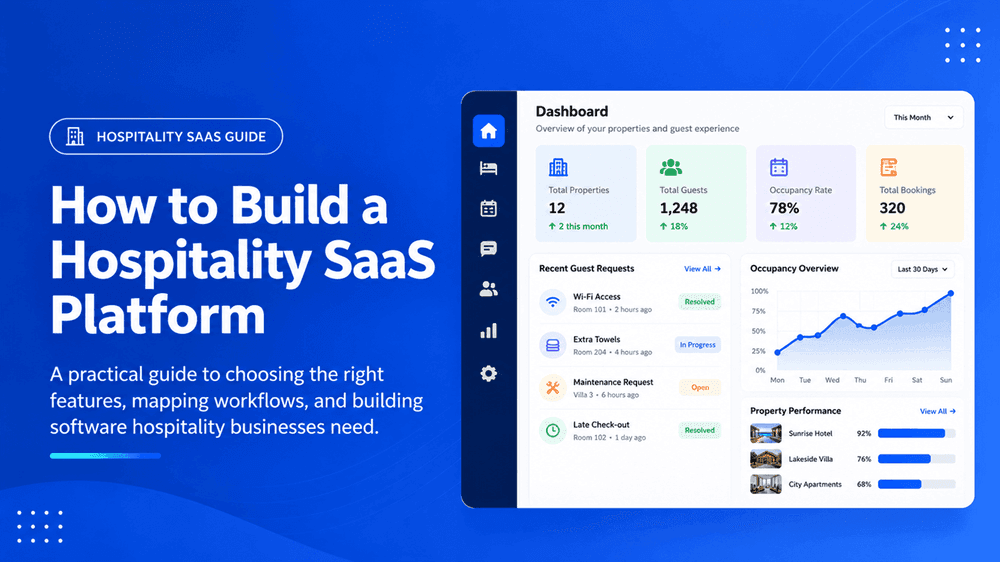
Suppose your product helps accommodation providers manage guest requests. The first version might need request submission, assignment, status updates, and a basic management view.
Advanced reporting can wait until customers need it. AI assistance can wait until there is a clear use case for it.
The right first version is the one that solves the main problem well enough for real customers to try it.
Once people start using the product, their feedback will give you a better idea of what to build next.
Think About the Daily Workflow, Not Just the Dashboard
A polished dashboard can make a product look impressive. It cannot compensate for a workflow that does not make sense.
Imagine a guest submits a maintenance request. Who receives it? How does the property manager assign it? Can the staff member update its status? What happens if nobody responds?
These questions may sound small, but they shape how useful the software will be.
Map the process before designing the screens. Understand what information moves between people, where approvals are required, and what should happen when something goes wrong.
This is also where an experienced development partner can help. The job is not just to convert a feature list into code. It is to question unclear requirements and help find a practical way to handle the business process.
Want us to build this for you?
Infynno builds AI-powered software for EdTech, enterprise, and SaaS teams. Free discovery call · NDA first.
Choose Technology That Fits the Product
The technology stack matters, but it should follow the requirements rather than dictate them.
A hospitality SaaS product may need separate customer accounts, different user permissions, integrations with existing systems, and reliable access to business data. If the platform grows, the software should be maintainable without requiring a complete rebuild every time a new requirement appears.
You don't need to build an unnecessarily complicated architecture on day one. You do need to make sensible decisions about customer data separation, security, backups, integrations, and future changes.
For an early-stage founder, the goal is to avoid two extremes: building more infrastructure than the product needs or taking shortcuts that become expensive to fix later.
What We Learned From Building GuestBrief
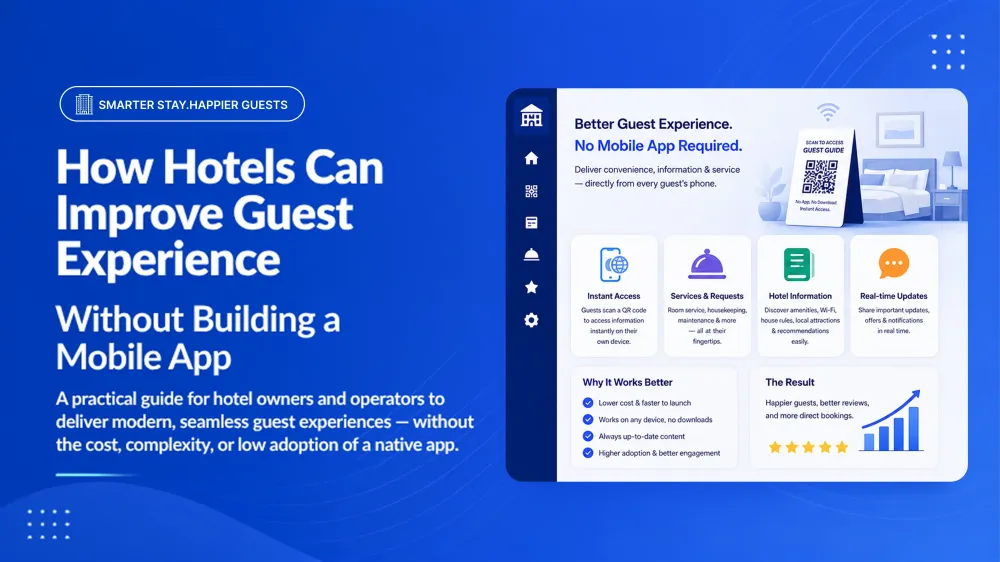
At Infynno, we developed GuestBrief, a digital guest experience platform for hotels, motels, Airbnb hosts, and other accommodation providers.
The idea addresses a straightforward operational need: guests frequently need property information, while accommodation providers need a manageable way to maintain it.
GuestBrief includes a guest portal for property information and local recommendations, a client portal for managing properties and content, and an administration portal for platform-wide management. It also supports QR code generation, custom pages, forms, visitor analytics, and role-based access controls.
The guest portal is only one part of the product. The management tools behind it are what allow accommodation providers to organize and maintain their information.
That is an important consideration when planning any hospitality software product. Think about the people who will manage the system after launch, not just the people who will see the finished interface.
How Do You Know When the Platform Is Working?
Launching the software is one milestone. Knowing whether it is useful is another.
The measurements should reflect the problem you set out to solve.
If the product is intended to reduce manual work, measure how much time the process takes before and after adoption. If it helps manage guest requests, look at response times and unresolved requests. If you are building a subscription product, pay attention to whether customers continue using and paying for it.
You do not need dozens of reports. A few meaningful measurements can tell you whether the product is helping customers and where improvements are needed.
Speak with customers regularly, observe how they use the software, and be prepared to change priorities when the evidence points in a different direction.
Building a Hospitality SaaS Product With Infynno
At Infynno, we work with businesses that need more than a working application. They need software that fits their operations and makes sense for the people using it.
For hospitality founders, that might mean building a new SaaS product, developing a property management portal, connecting existing systems, or improving an application that has become difficult to maintain.
Our approach starts with understanding the business problem, working through the requirements, and deciding what needs to be built first.
If you are planning a hospitality software product, explore our hospitality platform development services or take a look at GuestBrief.
You do not need to have every feature figured out before starting a conversation. You do need a clear understanding of the problem you want to solve.
Because building the software is only part of the job. Building something hospitality businesses genuinely need is what makes the effort worthwhile.